
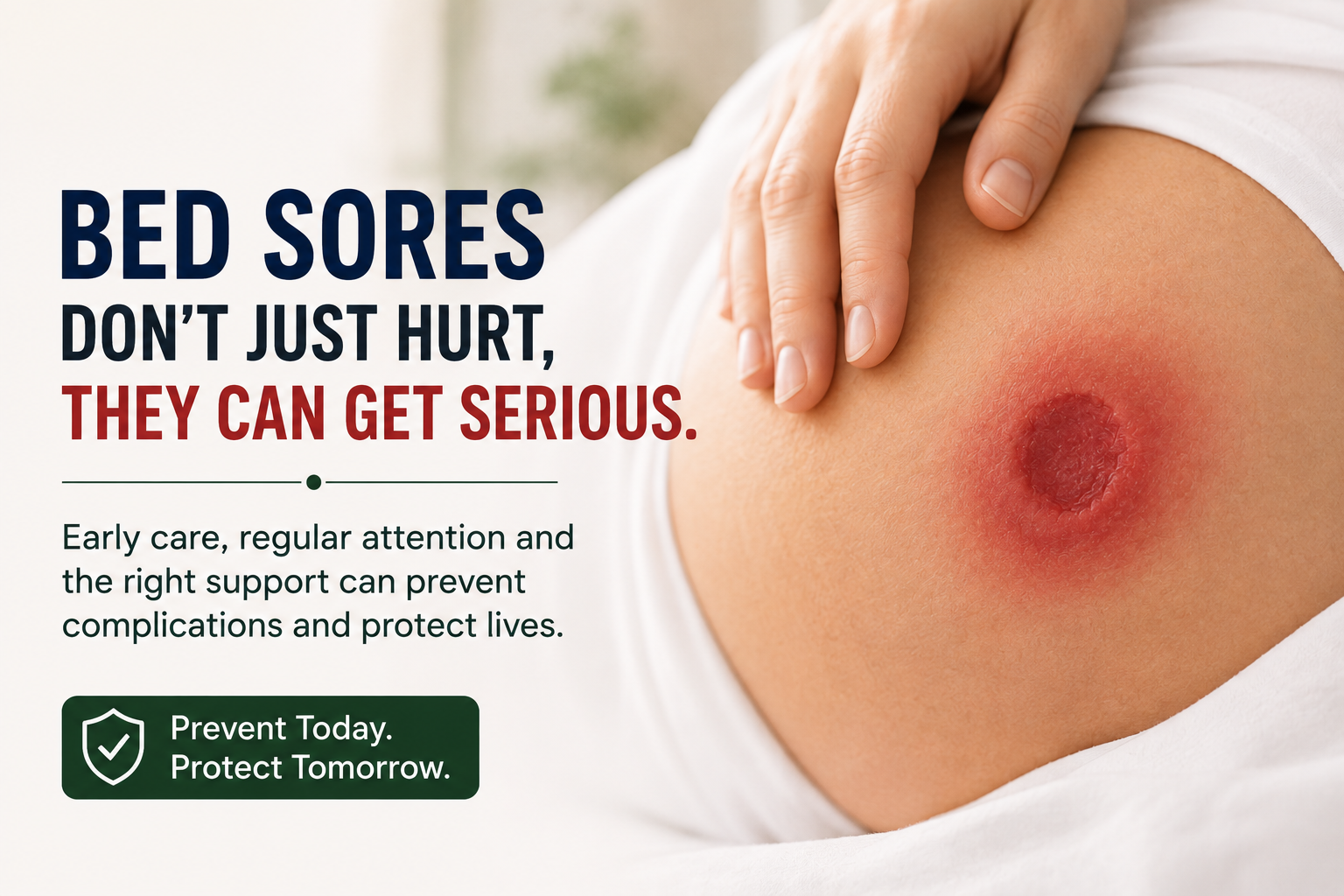
Bed Sore Risks in Bedridden Patients: Prevention, Care and Treatment by DRJV Healing
For a person who is unable to get out of bed, even simple daily activities such as changing position can require assistance. Spending long periods in the same position may seem harmless, but it can place continuous pressure on certain areas of the body and gradually damage the skin and underlying tissue.
This is how bed sores, also called pressure sores or pressure ulcers, can develop.
Bed sores are particularly important to watch for in bedridden patients because limited mobility makes it difficult to relieve pressure without help. Other factors such as poor nutrition, moisture, reduced sensation, fragile skin and poor circulation can further increase the risk.
The good news is that many pressure ulcers can be prevented or identified early with appropriate care.
In this guide, DRJV Healing explains why bedridden patients are more vulnerable to bed sores, what signs caregivers should watch for, how prevention works, and what treatment may involve once a pressure ulcer develops.
Why Are Bedridden Patients at Higher Risk of Bed Sores?
The primary problem is prolonged pressure.
When someone remains in the same position for an extended period, body weight can continuously press certain areas against the mattress. This can reduce blood flow to the tissues. If the pressure is not relieved, the skin and underlying tissues can become damaged.
Bedridden patients may also be unable to recognize or respond to early discomfort.
A healthy person naturally shifts position during sleep or when sitting for a long time. A bedridden patient may not be able to make these adjustments independently.
This is why regular repositioning and skin monitoring are such important parts of pressure ulcer prevention.
Where Do Bed Sores Usually Develop?
Pressure ulcers are more likely to develop over areas where bones are close to the skin.
Common locations include:
- Tailbone and lower back
- Hips
- Heels
- Ankles
- Elbows
- Shoulders
- Back of the head
The exact pressure points depend on whether the person is lying on their back, side, or sitting.
Caregivers should therefore avoid checking only one area. A daily skin inspection should include all areas that experience pressure.
What Makes Bed Sores Dangerous?
A pressure ulcer may begin with a relatively small change in the skin, but the damage can progress if the underlying pressure continues.
An early pressure injury may appear as persistent discoloration or an area that feels warmer, cooler, harder, softer or more painful than the surrounding skin.
If the pressure is not relieved, the injury can progress to an open wound and deeper tissue damage.
More advanced pressure ulcers can be difficult to heal and may become infected. In serious cases, pressure ulcers can involve deeper tissues and require more intensive medical treatment.
This is why caregivers should not wait until a large open wound develops before taking action.
Early Signs Caregivers Should Watch For
One of the most useful things a caregiver can do is check the patient’s skin regularly.
Look for:
- Persistent redness or discoloration
- Unusual warmth or coolness
- Swelling
- Tenderness or pain
- Hard or unusually soft skin
- Blisters
- Broken skin
- Changes around bony areas
A change in skin colour may be particularly important in darker skin tones, where redness may be less obvious. Checking temperature, texture, pain and other changes can provide additional clues.
If an area looks different from the surrounding skin, pressure should be relieved and the concern should be discussed with a healthcare professional when appropriate.
Prevention Starts With Regular Repositioning
For bedridden patients, repositioning is one of the most important preventive measures.
Changing position reduces the amount of time that pressure is concentrated on one area.
However, there is no single repositioning schedule that is suitable for every patient. The frequency should depend on the individual’s condition, skin tolerance, mobility, support surface and clinical risk assessment.
Some healthcare guidance provides general intervals, but emphasizes that the care plan should be individualized.
Caregivers should therefore follow the repositioning plan recommended by the patient’s healthcare team rather than relying on a fixed schedule found online.
Use Appropriate Pressure-Relieving Surfaces
The mattress and other support surfaces also matter.
Specialized mattresses and cushions can help redistribute pressure and reduce stress on vulnerable areas. However, these products do not eliminate the need for movement and regular repositioning.
For patients who spend most of their time in bed, a healthcare professional can help determine whether a pressure-redistributing mattress or other support surface is appropriate.
The same principle applies to wheelchair users who spend extended periods sitting.
Keep the Skin Clean and Dry
Moisture can make fragile skin more vulnerable to irritation and breakdown.
Bedridden patients may experience moisture from:
- Sweat
- Urine
- Stool
- Wound drainage
- Prolonged use of absorbent products
Caregivers should clean the skin gently and dry it carefully. Avoid aggressive rubbing because friction can further irritate vulnerable areas.
For patients with incontinence, a healthcare professional can recommend suitable skin-care products and moisture-management practices.
Nutrition and Hydration Matter
The skin needs adequate nutrition and hydration to maintain its integrity and support tissue repair.
Patients who are not eating well, losing weight or drinking insufficient fluids may have a higher risk of developing pressure ulcers or experiencing delayed healing.
A balanced diet with adequate protein and a variety of nutrients is important.
However, nutritional requirements differ from person to person. If a patient has a poor appetite, significant weight loss or difficulty eating, it is sensible to involve a doctor or dietitian rather than simply adding supplements without professional advice.
What If a Bedsore Has Already Developed?
Once a pressure ulcer has developed, prevention alone is no longer enough.
The wound should be assessed, particularly if the skin is broken, the wound is deep, or there are signs of infection.
Treatment can involve several components depending on the wound:
- Pressure relief
- Regular repositioning
- Appropriate wound cleaning
- Dressings
- Skin protection
- Pressure-relieving equipment
- Nutritional support
- Infection treatment when indicated
The NHS notes that treatment may include specialized mattresses or cushions, dressings, creams or ointments, wound cleaning and antibiotics when an ulcer is infected. Severe ulcers that do not respond to other treatment may sometimes require surgery.
This is an important distinction: there is no single ointment or treatment that is appropriate for every pressure ulcer.
The stage and condition of the wound should guide treatment.
Can Ointments Be Part of Bedsore Care?
Yes, creams and ointments may form part of pressure ulcer care, depending on the condition of the skin and the treatment plan.
A topical product may be used to support skin protection or wound care, but it should not replace pressure relief, repositioning, hygiene or professional wound assessment.
This is particularly important for bedridden patients preventing bedsores because the factors that caused the pressure injury may still be present.
For example, applying an ointment while the patient continues to experience prolonged pressure on the same area does not address the underlying cause.
Where DRJV Healing Fits Into Bedsore Care
DRJV Healing focuses on wound-care solutions designed around the needs of patients dealing with conditions such as bed sores and pressure-related wounds.
Its Cura Decubitus Ointment is positioned for the care of bed sores, slow-healing wounds and non-healing external ulcers.
For caregivers considering a topical wound-care product, the important point is to use it as part of an overall care routine rather than treating it as the only solution.
A broader bedsore management approach should continue to include pressure relief, regular skin assessment, appropriate hygiene, moisture management, nutrition and professional medical guidance whenever required.
When Should a Doctor Be Consulted?
Professional assessment is particularly important when:
- The wound is deep or getting larger
- The skin is breaking down quickly
- There is increasing redness or swelling
- The wound produces pus or unusual discharge
- There is a foul smell
- The patient develops fever
- Pain is increasing
- The wound does not appear to be improving
- The patient has diabetes, poor circulation or another condition that may affect healing
Do not delay medical attention because an ointment is already being used.
A healthcare professional may need to determine the wound’s stage, identify infection or deeper tissue damage, and develop an appropriate treatment plan.
A Practical Approach for Caregivers
For a bedridden patient, bedsore prevention works best when it becomes part of everyday care.
A simple routine can include:
Check. Inspect pressure-prone areas regularly.
Move. Follow the patient’s individualized repositioning plan.
Protect. Keep vulnerable skin clean, dry and protected.
Support. Use appropriate mattresses, cushions or other pressure-relieving equipment when recommended.
Nourish. Support adequate food and fluid intake.
Monitor. Watch for changes in skin colour, temperature, texture, pain or wound appearance.
Escalate. Seek professional help when a wound is worsening or showing signs of infection.
These steps may sound simple, but consistency is what makes them valuable.
Conclusion
Bed sores are more than a skin problem. For bedridden patients, they can develop because pressure remains on the same areas for too long, and limited mobility makes it difficult to relieve that pressure independently.
Early identification is therefore extremely important.
Regular repositioning, daily skin checks, appropriate support surfaces, moisture management, good nutrition and hydration all play important roles in reducing the risk of pressure ulcers. Once a bedsore develops, treatment should be based on the wound’s severity and the patient’s individual needs.
DRJV Healing’s Cura Decubitus Ointment can be considered as part of a broader wound-care routine for bed sores and related wounds. But responsible bedsore care goes beyond any single product. Pressure relief, wound assessment and appropriate medical care remain central to helping a patient recover safely.
For caregivers, the most important message is simple: do not wait for a small skin change to become a serious wound. Regular observation and early action can make a meaningful difference in bedsore management.