
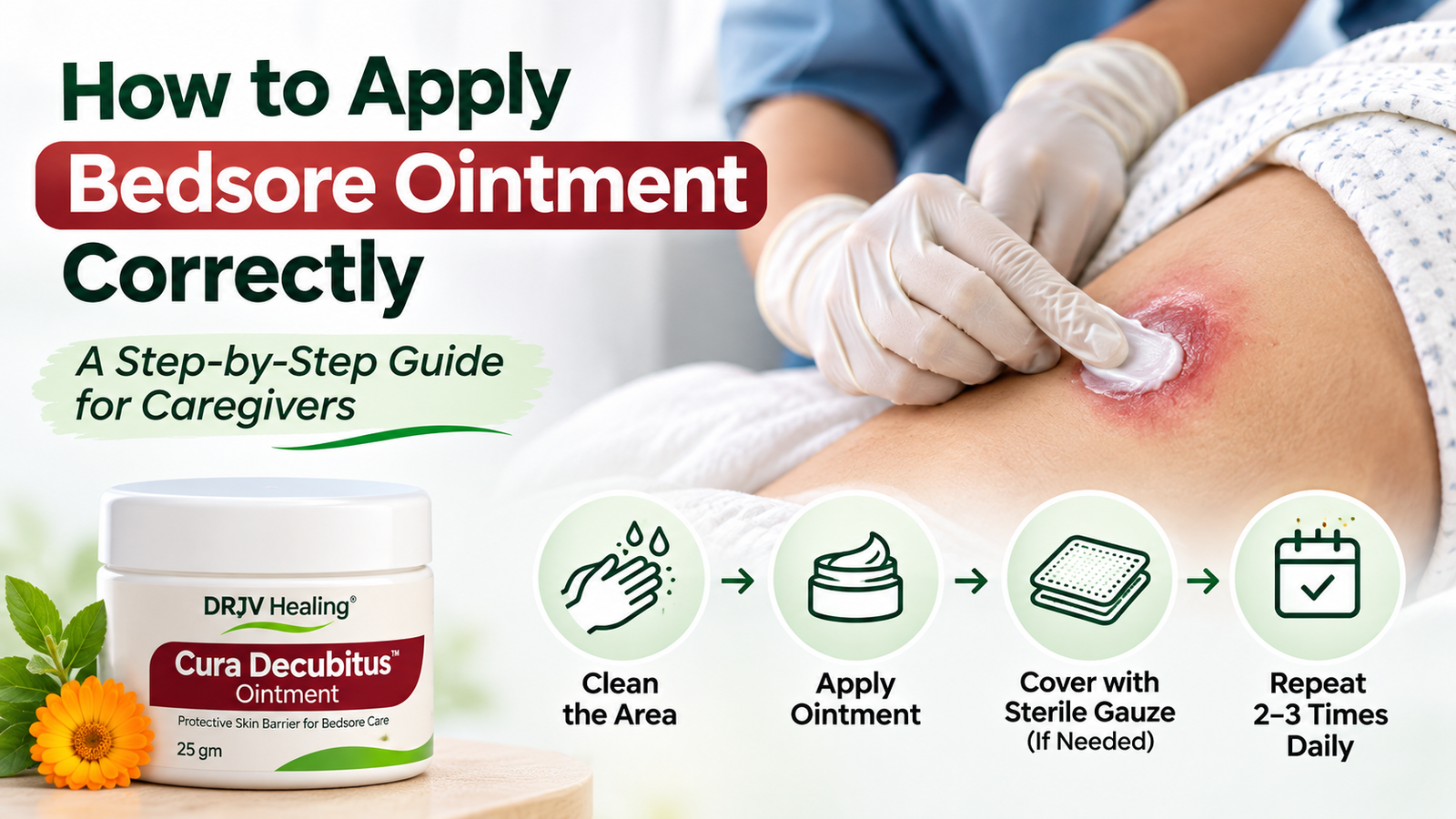
How to Apply Bedsore Ointment Correctly: A Step-by-Step Guide for Caregivers
Caring for a bedridden patient requires patience, consistency and attention to even the smallest changes in the skin. One common concern among caregivers is how to apply bedsore ointment correctly and ensure that the affected area receives appropriate care.
Bedsores, also known as pressure ulcers or pressure injuries, develop when prolonged pressure damages the skin and underlying tissue. They commonly affect the tailbone, hips, buttocks, heels and other areas that remain in contact with a bed or wheelchair for extended periods.
Using an appropriate topical product can be part of a bedsore-care routine. However, applying ointment without preparing the affected area or understanding the wound’s condition may not provide the intended benefits.
In this guide, we explain how to apply bedsore ointment correctly, common mistakes to avoid and how Cura Decubitus Ointment by DRJV Healing can fit into an appropriate skin-protection and bedsore-care routine.
Why Is It Important to Apply Bedsore Ointment Correctly?
Bedsore care involves more than simply applying a cream or ointment to the affected area. The skin may already be fragile, irritated or damaged, making gentle handling particularly important.
An appropriate topical product may help protect the skin, reduce friction and manage exposure to moisture, depending on its formulation and intended use.
Correct application also helps caregivers maintain a consistent routine and avoid unnecessary irritation.
However, it is important to understand that an ointment cannot independently remove pressure from the affected area or treat every type of pressure injury. Pressure relief, suitable wound dressings, nutrition and professional medical assessment remain important parts of care.
Step-by-Step Guide: How to Apply Bedsore Ointment Correctly
Before applying any bedsore ointment, check the product instructions and understand whether it is intended for intact skin, irritated skin or a particular type of wound.
Here are the basic steps caregivers should follow.
Step 1: Wash Your Hands Properly
Always begin by washing your hands with soap and clean water.
If you are handling an open wound or changing a dressing, use appropriate gloves and follow the hygiene instructions provided by the healthcare professional.
Keep the required supplies ready before starting:
- The recommended bedsore-care product
- Clean gauze or dressing material
- A suitable wound-cleaning solution
- Disposable gloves
- Clean towels or other recommended supplies
Keeping everything organised helps reduce unnecessary handling during the procedure.
Step 2: Gently Clean the Affected Area
Before applying a topical product, the affected area should be cleaned according to the patient’s wound-care plan.
For an open wound, use the cleaning solution recommended by the treating healthcare professional. Sterile saline may be advised for many wounds.
For intact skin around a pressure-prone area, gentle cleansing may be sufficient.
Avoid scrubbing, rubbing or applying excessive pressure. Fragile skin can become irritated or damaged through rough handling.
After cleaning, gently pat the surrounding skin dry with clean gauze or a soft towel, following the recommended wound-care procedure.
Step 3: Examine the Skin Before Applying Ointment
Take a moment to check the affected area before applying any product.
Look for:
- Redness or unusual skin discolouration
- Swelling or tenderness
- Changes in skin temperature
- Blisters or broken skin
- Unusual discharge
- Increasing pain or discomfort
If the wound is becoming deeper, larger or more painful, seek medical assessment.
Do not apply a routine protective ointment over a deep or complicated wound without checking whether it is appropriate for that wound.
Step 4: Apply the Recommended Product
Once the area has been prepared, follow the product’s instructions carefully.
If you are using Cura Decubitus Ointment by DRJV Healing, follow its intended application directions and the advice of the treating healthcare professional.
Cura Decubitus Ointment is an oil-based topical formulation designed around protective skin care. Its product positioning focuses on creating a protective layer that helps reduce exposure to moisture, friction and external irritants.
The formulation includes ingredients such as zinc oxide, neem, calendula officinalis, turmeric and sandalwood oil.
These ingredients are included for their stated skin-protection and soothing properties.
Apply the product only to the areas and in the manner permitted by its label and the patient’s care plan. Avoid excessive application, and do not introduce it into deep wounds unless specifically directed by a healthcare professional.
Step 5: Understand When Cura Decubitus Ultra Is Used
It is important to distinguish between Cura Decubitus Ointment and Cura Decubitus Ultra.
DRJV Healing offers these as two different products with different intended roles.
Cura Decubitus Ointment is positioned around protective barrier care, moisture protection and reducing friction.
Cura Decubitus Ultra is intended for direct wound application as described in the product’s wound-care instructions.
The product page describes a combined application routine in which Cura Decubitus Ultra is applied directly to the wound, followed by Cura Decubitus Ointment over the area.
This distinction matters because the two products should not be treated as interchangeable. Caregivers should follow the product directions and seek professional advice about whether a combined routine is suitable for the patient’s wound.
Step 6: Cover the Area If Required
Depending on the wound condition and the care plan, a suitable dressing or sterile gauze may be required.
The purpose of a dressing is to protect the wound, manage moisture and reduce contamination or friction.
However, not every skin condition requires the same dressing. The choice depends on the wound’s depth, location, discharge and surrounding skin condition.
Do not wrap the area tightly or use excessive adhesive, as this may create additional pressure or damage fragile skin.
Follow the recommended dressing-change schedule. If a dressing becomes soaked, dirty, loose or contaminated, seek guidance on replacing it appropriately.
Step 7: Follow the Recommended Application Frequency
Applying an ointment too frequently does not necessarily improve skin protection or wound healing.
For Cura Decubitus, the product page provides application guidance of two to three times daily and after each diaper change, or as directed by a physician.
Always check the current product label and confirm that the instructions are appropriate for the patient’s specific skin or wound condition.
If irritation develops or the condition worsens, stop and consult a healthcare professional.
Step 8: Reduce Pressure on the Affected Area
This is one of the most important parts of bedsore care.
Even when the correct ointment is used, continuous pressure can prevent the affected tissue from recovering.
Caregivers should:
- Follow an individualised repositioning schedule.
- Use suitable pressure-redistributing mattresses when recommended.
- Keep vulnerable areas such as heels free from direct pressure when appropriate.
- Avoid dragging patients across the bed.
- Use positioning aids and transfer equipment as advised.
Remember that topical products support only one part of the care routine. Reducing pressure is essential to preventing further pressure-related damage.
How Can Cura Decubitus Ointment Support Bedsore Care?
Choosing a suitable topical product is an important consideration for caregivers managing fragile or pressure-prone skin.
Cura Decubitus Ointment by DRJV Healing is an oil-based topical formulation designed for protective skin care and bedsore-related care needs.
Here are some of the product features highlighted by DRJV Healing.
1. Protective Skin Barrier
The formulation is designed to create an oil-based protective layer over the applied area. This helps reduce direct exposure to moisture and external irritants.
2. Moisture Protection
Patients who use diapers or remain in bed for long periods may experience repeated exposure to moisture. The protective barrier positioning of Cura Decubitus Ointment is relevant to this skin-care concern.
3. Support Against Friction
Repeated rubbing against bedding, clothing or other surfaces can irritate sensitive skin. The product is positioned to help reduce friction and chafing.
4. Skin-Soothing Ingredients
The formulation contains ingredients such as calendula, neem, turmeric and sandalwood oil, which are included for their stated soothing and skin-care properties.
5. Suitable for a Structured Care Routine
The product can be considered as part of an appropriate bedsore-care routine, provided its intended use matches the patient’s skin condition and professional guidance.
Cura Decubitus Ointment is not a replacement for pressure relief, wound assessment, appropriate dressings or treatment of infection.
Common Mistakes to Avoid When Applying Bedsore Ointment
Even with a suitable product, certain mistakes can interfere with proper care.
Applying ointment without cleaning the area: Dirt, sweat and other contaminants should be managed using the recommended cleaning procedure.
Rubbing the affected skin: Vigorous rubbing can damage fragile tissue and increase irritation.
Applying multiple products together: Combining different creams, powders or antiseptics without professional guidance may irritate the skin or interfere with wound care.
Ignoring continuous pressure: An ointment cannot compensate for a patient remaining in the same position for extended periods.
Using the wrong product for an open wound: Products intended for skin protection may not be appropriate for every wound. Check the intended use before application.
Ignoring signs of infection: Increasing pain, swelling, warmth, pus, spreading redness or fever require medical attention.
When Should You Consult a Doctor?
Not every bedsore can be managed through a home-care routine.
Consult a healthcare professional if you notice:
- A wound becoming larger or deeper
- Persistent or increasing pain
- Pus or unusual discharge
- Increasing redness, warmth or swelling
- Purple, maroon or black discolouration
- Exposed deeper tissue
- Fever or other signs of infection
Seek urgent medical care if the patient develops fever with worsening wound symptoms, rapidly spreading redness, confusion or signs of serious illness.
Patients with diabetes, poor circulation or weakened immunity may need earlier medical assessment.
Frequently Asked Questions
How often should bedsore ointment be applied?
Application frequency depends on the product and the patient’s condition. DRJV Healing’s product page provides guidance for Cura Decubitus Ointment of two to three applications daily and after each diaper change, or as directed by a physician. Always follow the current label and professional advice.
Should I clean a bedsore before applying ointment?
Yes, follow the recommended wound-cleaning procedure before applying a topical product. Use an appropriate cleanser as advised by the healthcare professional. Avoid scrubbing or rubbing the affected tissue.
Can bedsore ointment be applied to open wounds?
Not every ointment is suitable for every open wound. Check the product’s intended use and seek professional advice before applying it directly to an open or deep pressure injury.
Is Cura Decubitus Ointment the same as Cura Decubitus Ultra?
No. They are separate products with different intended roles. Cura Decubitus Ointment is positioned around protective barrier care, while Cura Decubitus Ultra is intended for direct wound application according to its product directions.
Can ointment alone cure bedsores?
No. Ointment alone cannot address all the causes of pressure injuries. Appropriate pressure relief, wound assessment, suitable dressings, nutrition and management of underlying health conditions are also important.
Can caregivers use Cura Decubitus Ointment at home?
It may be considered as part of an appropriate home-care routine when its intended use matches the patient’s needs. Caregivers should follow product directions and seek professional advice, particularly when an open or worsening wound is present.
Conclusion
Applying bedsore ointment correctly is an important part of caring for patients with fragile, irritated or pressure-prone skin. However, the process involves more than applying a topical product. Proper hygiene, gentle cleaning, suitable application, appropriate dressings and consistent pressure relief all contribute to a more complete care routine.
Cura Decubitus Ointment by DRJV Healing offers a protective, oil-based topical formulation designed to help protect skin from moisture, friction and external irritants. Its formulation includes ingredients such as zinc oxide, neem, calendula and turmeric.
For caregivers looking for a product to include in an appropriate bedsore-care routine, Cura Decubitus Ointment is an option worth exploring. The choice should always depend on the patient’s skin condition, product directions and professional guidance.
Related Articles