
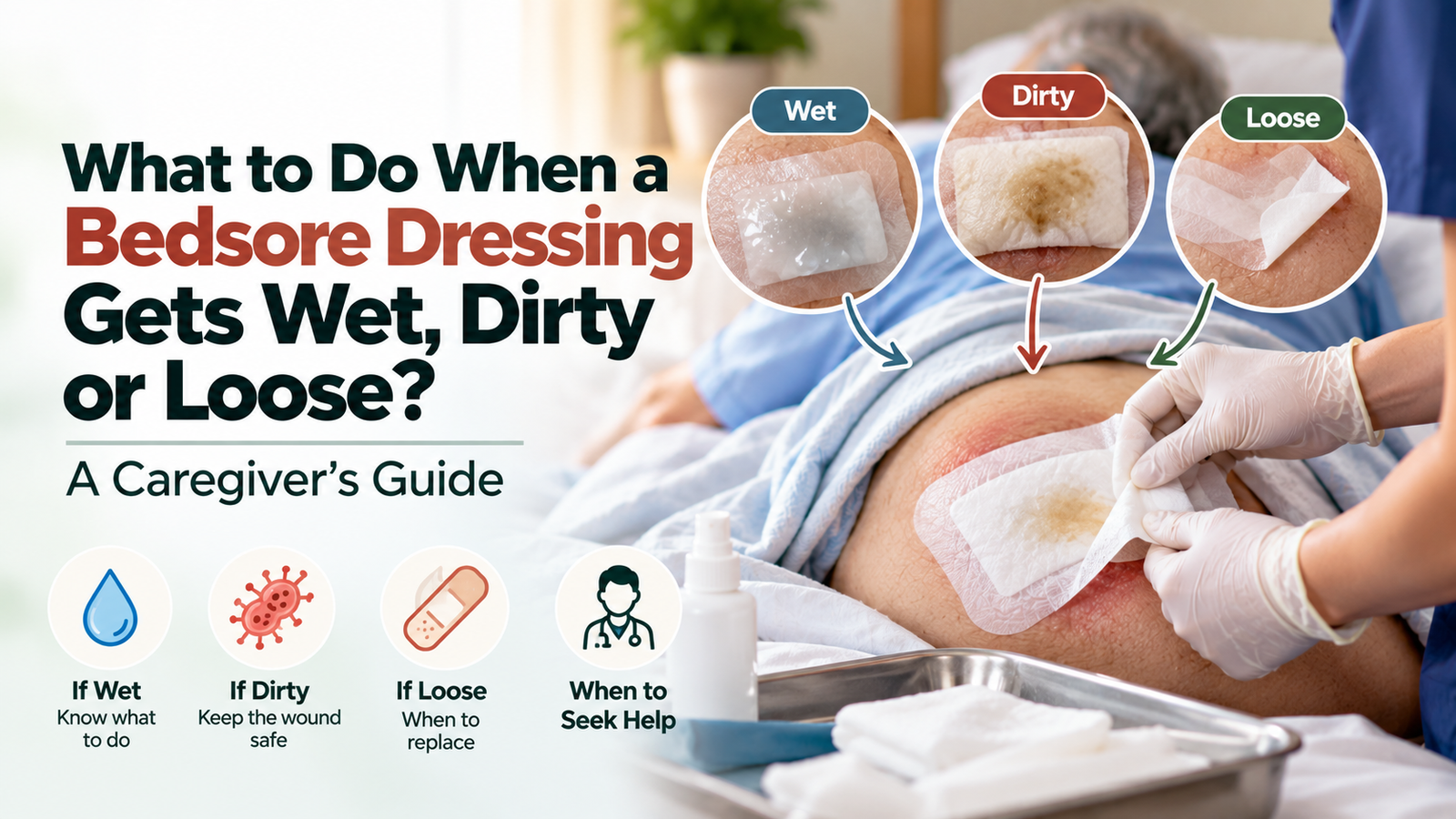
What to Do When a Bedsore Dressing Gets Wet, Dirty or Loose: A Caregiver’s Guide
A bedsore dressing plays an important role in protecting a wound, managing moisture and supporting the healing process. However, when a dressing becomes wet, dirty, loose or soaked with wound fluid, caregivers may wonder whether it should be changed immediately or left in place until the next scheduled dressing change.
This is a common concern for people caring for bedridden patients at home. A dressing that no longer works properly may fail to protect the wound and can increase the risk of skin irritation or contamination. At the same time, removing a dressing unnecessarily or using the wrong technique can disturb fragile healing tissue.
The correct response depends on the type of dressing, the condition of the wound and the instructions provided by the healthcare professional. This guide explains what caregivers should do when a bedsore dressing becomes wet, dirty or loose, which mistakes to avoid and when medical advice is necessary.
Why Is a Bedsore Dressing Important?
A bedsore, also known as a pressure ulcer or pressure injury, develops when prolonged pressure damages the skin and underlying tissue. These wounds commonly affect the tailbone, hips, heels, buttocks and other areas exposed to pressure.
An appropriate dressing can help protect the wound from contamination, manage wound fluid, reduce friction and maintain a suitable environment for healing. The type of dressing depends on factors such as the wound’s depth, location, moisture level and condition.
Not every bedsore requires the same dressing. Some wounds need a simple protective covering, while deeper or heavily draining wounds may require specialised products and professional wound management.
According to pressure ulcer care guidance, dressing selection should consider the patient’s comfort, wound location, amount of discharge and the required frequency of dressing changes.
What Should You Do If a Bedsore Dressing Gets Wet?
If a bedsore dressing becomes wet, do not ignore it. Moisture can affect how well a dressing protects the wound, and some materials may lose their ability to absorb fluid or remain securely in place.
The appropriate response depends on how wet the dressing is and what caused the moisture.
1. Identify the Source of Moisture
First, try to understand why the dressing has become wet. Common causes include:
- Water from bathing or cleaning
- Sweat, especially in warm weather
- Urine or stool contamination
- Fluid draining from the wound
- Moisture trapped under the dressing
Knowing the source helps determine the next step. For example, a dressing that has become wet during bathing presents a different situation from one that is repeatedly soaked by wound discharge.
2. Check Whether the Dressing Is Still Intact
Without disturbing the wound, check whether the dressing remains securely attached and whether moisture has reached its inner layer.
If the dressing is soaked, leaking, contaminated or no longer functioning as intended, contact the treating healthcare professional or follow the dressing-change instructions already provided.
Do not assume that a dressing is safe to leave in place simply because the outside appears dry. Some dressings can trap moisture underneath or become ineffective without obvious external signs.
3. Replace the Dressing According to the Care Plan
If you have been trained to change the dressing, follow the instructions given by the healthcare professional. Use the recommended replacement dressing and maintain clean hands and appropriate supplies.
If you have not been trained, or if the wound is deep, heavily draining or complicated, seek professional guidance rather than attempting an unfamiliar dressing change.
Avoid placing extra gauze or tape over a soaked dressing as a substitute for proper assessment and replacement.
4. Keep the Surrounding Skin Dry
Moisture around the wound can soften the skin, a process known as maceration. This can make the surrounding area more vulnerable to damage.
During the dressing change, follow the recommended cleaning procedure and gently dry the surrounding skin without rubbing the wound. Use a skin barrier product only if it is suitable for the patient and recommended by the healthcare professional.
What Should You Do If a Bedsore Dressing Gets Dirty?
A dressing can become dirty when it comes into contact with unclean hands, bedding, urine, stool or other contaminants. A dirty dressing should not be ignored because contamination may compromise the wound’s protection.
1. Avoid Touching the Wound With Unclean Hands
Wash your hands thoroughly before handling wound-care supplies. If available and appropriate for the procedure, use clean disposable gloves.
Prepare the supplies before beginning so that you do not need to search for items while the wound is uncovered.
2. Determine Whether the Dressing Needs Changing
If dirt or bodily waste has contaminated the dressing, follow the wound-care plan for prompt replacement. If you are uncertain how to proceed, contact the treating nurse or doctor.
A dressing that has been contaminated with stool or urine deserves particular attention because these substances can introduce microorganisms and irritate the surrounding skin.
3. Clean the Wound Only as Directed
When a dressing change is required, clean the wound using the solution and technique recommended for that particular wound. Sterile saline or another clinician-approved cleanser may be advised, depending on the circumstances.
Do not scrub the wound, pull away tissue that appears attached or use strong antiseptics unless specifically instructed. Some cleaning agents can damage healthy tissue and interfere with healing.
After cleaning, apply the prescribed dressing using the recommended technique.
4. Dispose of Used Materials Safely
Place used dressings and disposable supplies in an appropriate waste container. Remove gloves safely if worn, and wash your hands after completing the procedure.
Keep fresh dressings and wound-care supplies in a clean, dry place.
What If the Bedsore Dressing Becomes Loose or Starts Peeling?
A loose dressing may expose the wound to friction, moisture and contamination. It may also fail to remain in the correct position over the affected area.
Common reasons for a dressing becoming loose include sweating, movement, friction from bedding and moisture from wound discharge.
Here is what caregivers should do:
- Check whether the dressing is lifting at the edges or has come away from the wound.
- Avoid repeatedly pressing down on a dressing that has become wet, dirty or contaminated.
- Follow the care plan for securing or replacing the dressing.
- Use only the recommended adhesive or fixation method.
- Seek advice if the dressing repeatedly becomes loose or fails to stay in place.
Do not apply excessive tape or wrap the area tightly. Tight coverings can create additional pressure, restrict circulation or damage fragile skin.
If the dressing repeatedly slips because of the wound’s location, movement or heavy discharge, the healthcare professional may need to reassess the dressing type and fixation method.
What If the Dressing Is Soaked With Wound Fluid?
Some wound fluid is expected during healing. However, a dressing that becomes saturated quickly may indicate that the wound is producing more fluid than the dressing can manage.
Excessive moisture can damage the surrounding skin and may indicate a need to review the wound-care plan.
If the dressing repeatedly becomes soaked:
- Note how quickly the fluid passes through the dressing.
- Observe whether the discharge has changed in colour, amount or smell.
- Follow the existing instructions for dressing replacement.
- Contact the treating healthcare professional for reassessment.
Do not assume that increased discharge automatically means the wound is infected. However, increasing discharge accompanied by worsening pain, warmth, swelling, redness or pus needs prompt medical assessment.
The healthcare professional may need to review the dressing’s absorbency, the wound’s condition and whether additional treatment is required.
Warning Signs That Need Medical Attention
A wet, dirty or loose dressing is not always an emergency. However, certain changes in the wound or the patient’s general condition should not be ignored.
Contact a healthcare professional promptly if you notice:
- Increasing redness, warmth or swelling around the wound
- New or worsening pain
- Pus or a significant change in discharge
- A strong or unusual smell accompanied by other changes
- The wound becoming larger or deeper
- New dark or purple discolouration
- Surrounding skin becoming increasingly soft, white or damaged
Seek urgent medical care if the patient develops fever with worsening wound symptoms, rapidly spreading redness, severe pain, confusion or signs of serious illness. These symptoms may indicate a significant infection or another complication.
Patients with diabetes, poor circulation or weakened immunity may need earlier assessment because they can be more vulnerable to wound complications.
Common Bedsore Dressing Mistakes to Avoid
Small mistakes during wound care can create additional problems. Caregivers should avoid the following practices.
Leaving a Saturated or Contaminated Dressing in Place
A dressing that is soaked, dirty or no longer functioning properly may not provide adequate protection. Follow the prescribed plan and seek advice when necessary.
Changing the Dressing Too Frequently Without a Reason
Changing a dressing more often than instructed can disturb healing tissue, irritate the skin and cause discomfort. Follow the recommended schedule unless the dressing becomes compromised or the care team advises otherwise.
Using Unrecommended Creams or Antiseptics
Applying multiple products may irritate the wound or interfere with the intended dressing. Use only products approved for the patient’s wound-care plan.
Pulling Off a Dressing That Is Stuck
A dressing that adheres to the wound can damage fragile tissue when removed forcefully. Follow the recommended removal method and seek help if the dressing cannot be removed safely.
Ignoring Pressure on the Wound
Even a correctly applied dressing cannot prevent a bedsore from worsening if pressure continues on the affected area. Repositioning, suitable support surfaces and an individualised pressure-relief plan remain important parts of care.
How Can You Keep Bedsore Dressings Clean and Dry?
Preventive steps can help reduce unnecessary dressing changes and protect the wound.
Keep bathing water away from the dressing. Follow professional instructions about bathing and use a suitable protective cover if recommended.
Change wet or soiled bedding promptly. Moist bedding can affect the dressing and irritate the patient’s skin.
Check the dressing regularly. Follow the monitoring schedule provided by the healthcare professional, paying attention to leakage, loose edges and visible contamination.
Manage sweating and incontinence. Clean and protect the surrounding skin as directed, and change wet clothing or bedding promptly.
Reduce friction and pressure. Move the patient carefully and follow the recommended repositioning plan. Use suitable support surfaces when advised.
Keep supplies organised. Store dressings and other wound-care materials in a clean, dry location and check that replacement supplies are available.
These steps support a consistent wound-care routine, but they do not replace professional assessment or an individualised treatment plan.
Can Ointment Be Applied When Changing a Bedsore Dressing?
Whether an ointment should be applied depends on the wound’s condition, the product’s intended use and the dressing instructions.
Some wound-care plans include a topical product, while others use a dressing without ointment. Applying too much product or combining different creams without guidance may interfere with the dressing’s function.
Cura Decubitus Ointment from DRJV Healing may be considered as part of an appropriate bedsore-care routine when its intended use and product directions are suitable. It should be used according to the label and professional advice.
If the wound is worsening, the dressing repeatedly becomes saturated or signs of infection appear, seek medical assessment rather than relying on an ointment alone. Pressure relief, suitable wound cleaning, dressing selection and management of underlying health conditions may all be necessary.
Related Articles