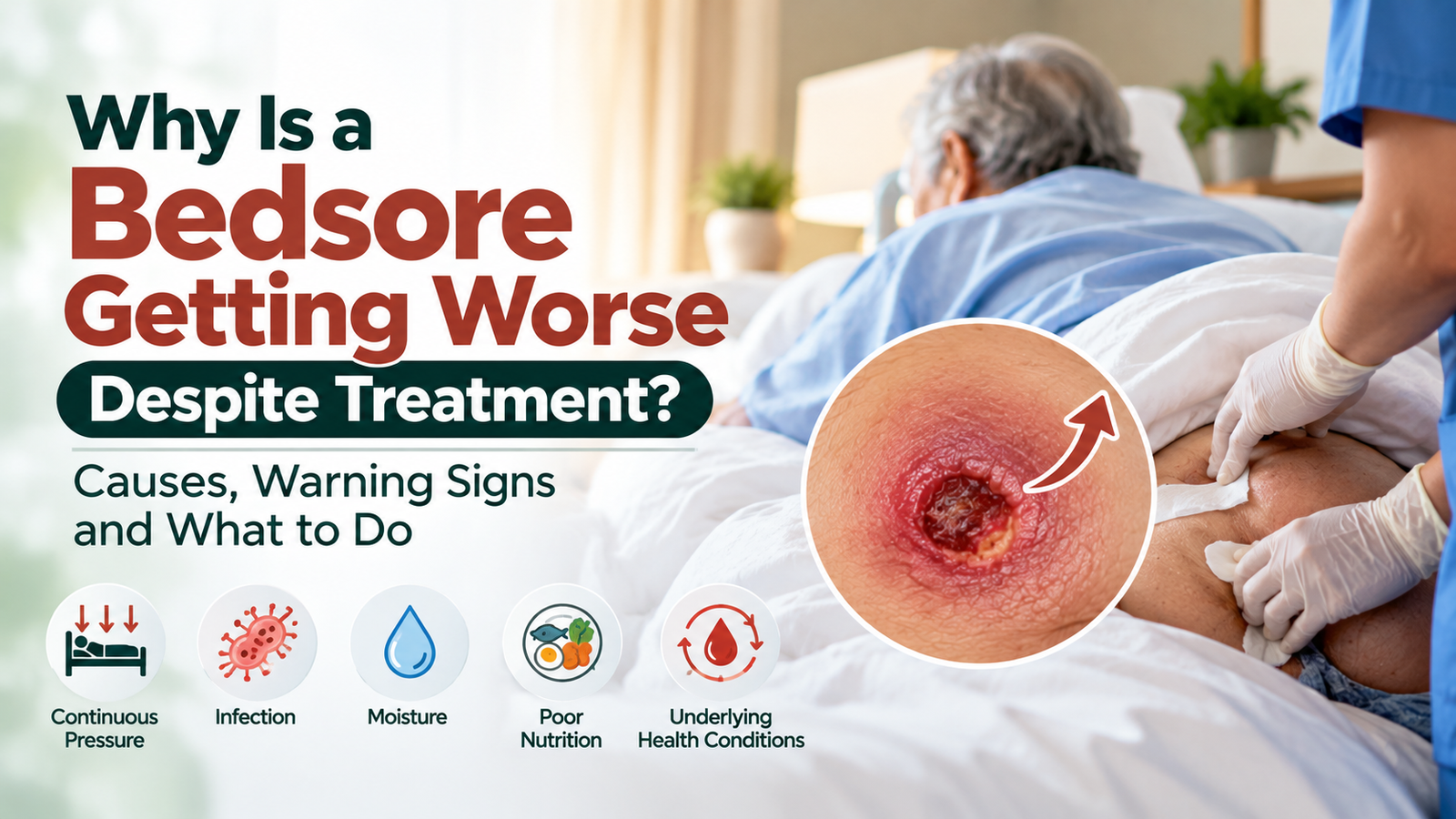
Why Is a Bedsore Getting Worse Despite Treatment? Causes, Warning Signs and What to Do
A bedsore can sometimes get worse even when a patient is receiving treatment. The wound may become larger, the surrounding skin may turn red or dark, or the affected area may develop more pain, swelling or discharge. For family members and caregivers, this can be worrying, especially when they are regularly cleaning the wound and applying prescribed ointments or dressings.
The reason is that bedsore healing depends on more than topical treatment. Continuous pressure, friction, moisture, poor nutrition, infection and underlying health conditions can slow recovery or cause further skin damage. If these factors are not addressed, a bedsore may continue to worsen despite regular care.
Understanding why a bedsore is not improving can help caregivers recognise warning signs and seek appropriate medical attention. This guide explains the common causes, what to watch for and how to support safer wound healing.
What Is a Bedsore?
A bedsore, also called a pressure ulcer or pressure injury, is damage to the skin and underlying tissue caused mainly by prolonged pressure. It commonly develops in people who spend long periods in bed or sit in a wheelchair for extended periods without changing position.
Common areas affected by bedsores include:
- The lower back and tailbone
- The heels and ankles
- The hips
- The buttocks
- The elbows
- The back of the head
Pressure reduces blood flow to the affected tissue, limiting the oxygen and nutrients needed to keep the skin healthy. When pressure continues, the tissue can become damaged and an open wound may develop.
Bedsores can range from early skin changes to deep wounds involving underlying tissue. Their severity depends on the extent of the damage, the patient’s overall health and whether the factors causing pressure are properly managed.
Why Is a Bedsore Getting Worse Despite Treatment?
Several factors can prevent a bedsore from healing. In many cases, more than one factor is involved.
1. Continuous Pressure on the Affected Area
One of the most common reasons a bedsore worsens is that pressure continues to affect the same area.
For example, a bedridden patient may spend most of the day lying on their back. Even if the wound is cleaned and an ointment is applied, the continued pressure on the tailbone can restrict blood circulation and cause further tissue damage.
Pressure can also develop when a patient remains seated in the same position for long periods.
What can help?
Caregivers should follow an individualised repositioning plan recommended by the patient’s healthcare professional. Pillows, appropriate positioning aids and pressure-redistributing mattresses may help reduce pressure on vulnerable areas.
The affected wound should not be placed directly against a surface whenever possible. Repositioning needs vary depending on the patient’s condition, skin response and support surface.
2. The Wound Has Developed an Infection
An infected bedsore may become worse even when routine wound care is being provided. Infection can damage surrounding tissue and delay the healing process.
Possible warning signs include:
- Increasing pain or tenderness
- Redness or warmth around the wound
- Increasing swelling
- Pus or a change in wound discharge
- An unpleasant smell, particularly when accompanied by other changes
- Fever, chills or feeling generally unwell
Not every bedsore with discharge or an unpleasant smell is infected, and some infections may occur without obvious symptoms, particularly in vulnerable patients.
What can help?
Seek prompt medical assessment if infection is suspected. A healthcare professional can examine the wound and decide whether additional treatment, such as specific wound care or antibiotics, is needed.
Do not start antibiotics or apply strong antiseptics without professional advice. Severe infection can spread beyond the wound and may require urgent treatment.
3. The Bedsore Is Deeper Than It Appears
A bedsore may look small on the surface while the damage underneath is more extensive. Some pressure injuries involve deeper tissue, making it difficult to judge their severity from appearance alone.
A wound that seems unchanged in size may still be developing deeper tissue damage. Dark purple or maroon skin can sometimes indicate deeper pressure-related injury, even when the skin has not opened.
What can help?
A healthcare professional should assess a wound that is deep, rapidly changing, discoloured or not healing as expected. Avoid pressing, probing or attempting to remove damaged tissue at home.
Correct assessment is important because different pressure injuries require different care approaches.
4. Moisture Is Damaging the Surrounding Skin
Moisture from sweating, urine, stool or wound discharge can weaken the skin. When the skin remains wet for long periods, it becomes more vulnerable to friction and breakdown.
This is particularly common among patients who have limited mobility or difficulty controlling bladder or bowel movements.
Moisture damage may occur around a bedsore and can make the affected area look larger or more inflamed. However, moisture-associated skin damage and pressure injuries are not the same condition, so the affected skin should be assessed correctly.
What can help?
Keep the surrounding skin clean and gently dry it after cleansing. Use suitable skin-protection products when recommended by a healthcare professional, and change wet or soiled clothing and bedding promptly.
Avoid vigorous rubbing, as fragile skin can tear easily.
5. Poor Nutrition Is Slowing the Healing Process
The body needs enough energy, protein, vitamins, minerals and fluids to repair damaged tissue. Patients who eat very little, have difficulty swallowing or experience unintentional weight loss may struggle to meet these needs.
Protein is particularly important because it supports tissue repair. Inadequate overall food intake can also affect immune function and the body’s ability to recover.
However, poor nutrition is not the only reason a bedsore may worsen, and dietary changes alone cannot correct ongoing pressure or infection.
What can help?
Offer balanced meals that include suitable sources of protein, such as eggs, dairy products, lentils, beans, fish or other foods appropriate to the patient’s diet.
If the patient has poor appetite, swallowing difficulties, kidney disease or other dietary restrictions, consult a doctor or registered dietitian before making major changes. A professional can assess nutritional needs and advise whether supplements are appropriate.
6. The Dressing or Wound-Care Method Is Not Suitable
A bedsore needs appropriate wound care based on its condition. Using an unsuitable dressing, changing it too infrequently or disturbing the wound unnecessarily may interfere with healing.
A dressing that becomes wet, dirty, displaced or saturated may no longer protect the wound effectively. On the other hand, removing a dressing too frequently can damage newly forming tissue.
Some products may also irritate sensitive skin or be unsuitable for a particular wound.
What can help?
Follow the wound-care instructions provided by the treating healthcare professional. Ask when the dressing should be changed, how the wound should be cleaned and what to do if the dressing becomes wet or loose.
Avoid experimenting with multiple creams, powders, home remedies or antiseptics. If the wound deteriorates after a product is introduced, seek professional advice about whether it should be discontinued.
7. An Underlying Health Condition Is Affecting Recovery
Certain health conditions can make wound healing more difficult. These include diabetes, poor circulation and conditions that affect immunity.
For example, high blood glucose can interfere with normal healing and increase the risk of infection. Reduced circulation can limit the oxygen and nutrients reaching damaged tissue.
Age, frailty, some medications and general illness may also affect recovery.
What can help?
The patient’s healthcare professional may need to review blood glucose levels, circulation, nutritional status, medications and other relevant health factors.
Managing an underlying condition is an important part of bedsore care. Applying an ointment alone cannot correct problems such as poor blood supply or uncontrolled diabetes.
8. Friction and Shearing Are Causing Further Damage
Friction occurs when skin rubs against bedding, clothing or another surface. Shearing happens when the skin stays in place while deeper tissues move, such as when a patient slides down in bed.
Both forces can damage fragile skin and worsen pressure injuries.
Pulling a patient across the bed rather than lifting or repositioning them carefully may increase the risk of skin damage.
What can help?
Caregivers should use appropriate moving and handling techniques. Slide sheets and other transfer aids may help when used correctly, and the bed’s positioning should be reviewed to reduce unnecessary sliding.
Avoid massaging reddened or damaged areas, as this can cause further injury.
How Can You Tell If a Bedsore Is Getting Worse?
Changes in a bedsore should be monitored rather than judged only by its size. Warning signs can include:
- The wound becoming wider or deeper
- New areas of skin breakdown
- Increasing pain or tenderness
- New or spreading discolouration
- Increasing wound discharge
- New swelling or warmth
- Exposed deeper tissue
- A change in the patient’s general condition
Caregivers can record the wound’s appearance and note changes in pain, discharge and surrounding skin. Photographs may help track changes if they are taken consistently and with appropriate privacy.
However, visual monitoring cannot reliably determine the full depth of an injury or rule out infection. A wound that is deteriorating should be assessed by a qualified healthcare professional.
When Should You Seek Medical Attention?
Do not wait for a bedsore to become severe before seeking help.
Arrange a prompt medical assessment if the wound is getting larger, deeper or more painful, or if there is new discolouration, increasing discharge or suspected infection.
Seek urgent medical care if the patient develops fever with worsening wound symptoms, spreading redness, rapidly increasing swelling, severe or disproportionate pain, confusion, unusual drowsiness or other signs of serious illness. These symptoms may indicate a significant infection or another urgent problem.
Black tissue, exposed bone or a deep wound also requires prompt professional assessment. Do not attempt to remove dead tissue yourself.
People with diabetes, poor circulation or weakened immunity may need a lower threshold for seeking medical advice.
How Can Caregivers Support Bedsore Healing?
A consistent care routine can help reduce further damage while the wound receives appropriate treatment.
1. Reduce pressure: Follow the patient’s individual repositioning plan and use suitable pressure-redistributing equipment.
2. Maintain gentle hygiene: Clean the wound according to professional instructions and protect the surrounding skin from moisture.
3. Follow the recommended dressing plan: Use the advised wound-care products and change dressings as directed.
4. Support adequate nutrition: Provide balanced meals and sufficient fluids, subject to the patient’s medical needs and any fluid restrictions.
5. Monitor changes: Record the wound’s appearance and report deterioration instead of repeatedly trying new home treatments.
6. Attend follow-up appointments: The care plan may need adjustment if the wound is not progressing as expected.
7. Involve the right healthcare professionals: Depending on the patient’s needs, care may involve a doctor, wound-care nurse, dietitian or other specialist.
The most effective approach addresses the causes of the injury as well as the wound itself.
Can Bedsore Ointment Help If the Wound Is Getting Worse?
An ointment may be part of a bedsore care routine, depending on the product’s intended use and the patient’s wound condition. However, no ointment can independently remove pressure, correct poor circulation, resolve nutritional deficiencies or treat every wound infection.
The appropriate topical product depends on the wound’s condition and the instructions of the healthcare professional. Some wounds need specific dressings or other interventions rather than an ointment alone.
Cura Decubitus Ointment from DRJV Healing may be considered as part of a suitable bedsore-care routine when its intended use and product directions are appropriate. It should not replace medical assessment, pressure relief or other necessary treatment.
If a bedsore continues to worsen after using an ointment, do not simply apply more product or switch to another one without advice. The wound may need reassessment to identify the reason for deterioration and determine whether the care plan needs to change.