
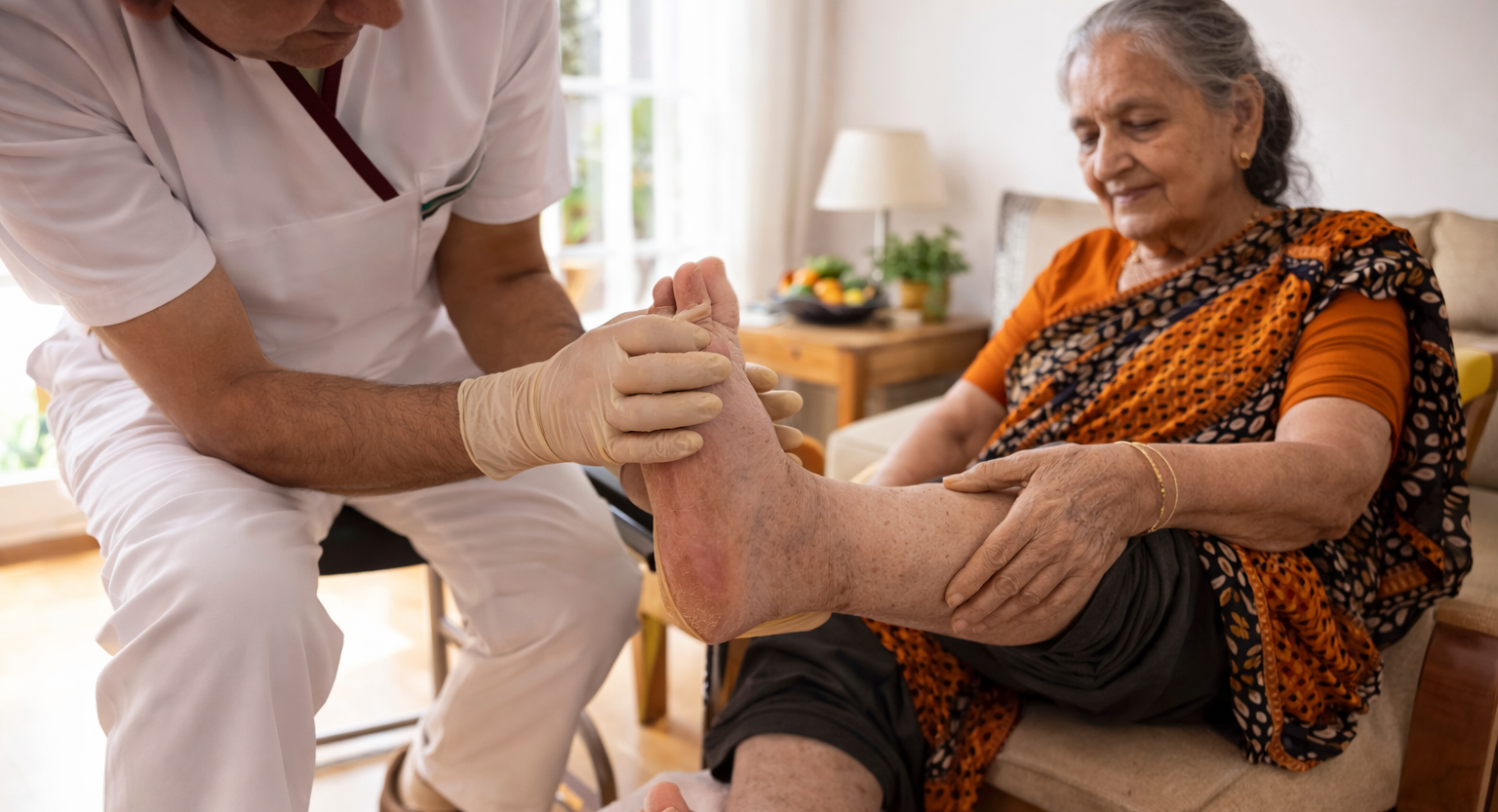
Role of physiotherapy in bedsore recovery
Physiotherapy improves circulation and reduces pressure. Combined with Cura Decubitus™, outcomes improve.
Safe Positioning Techniques to Reduce Pressure
Proper positioning is one of the most effective ways to prevent and manage bedsores. The goal is to reduce constant pressure, improve blood circulation, and protect vulnerable skin areas.
1. Repositioning at Regular Intervals
Why it matters:
Constant pressure on one area reduces blood flow, increasing the risk of skin breakdown.
Best practice:
- Reposition the patient every 2 hours (or as advised)
- Alternate between:
- Back (supine)
- Side-lying (left & right)
- Semi-upright (if permitted)
Care tip:
Avoid dragging the patient during movement—lift gently to prevent friction and skin tears.
2. 30-Degree Side-Lying Position (Highly Recommended)
What it is:
Instead of lying directly on the hip, the patient is tilted slightly backward at a 30-degree angle.
Benefits:
- Reduces pressure on hips and tailbone.
- Improves comfort.
- Safer than full side-lying for long periods.
How to support:
- Place a pillow behind back.
- Pillow between knees.
- Small cushion under the ankle (heels off the bed).
3. Proper Supine (On-the-Back) Positioning
Key pressure areas:
Back of head, shoulders, elbows, lower back, buttocks, heels
How to reduce pressure:
- Pillow under calves to lift heels off the bed
- Small cushion under arms to protect elbows
- Keep head pillow neutral (not too high)
Important:
Heels should never rest directly on the mattress for long periods.
4. Heel Off-Loading Technique
Why heels need special care:
Heels have very little padding and are among the most common bedsore sites.
Correct method:
- Place a pillow under the lower leg (not under the heel).
- The heel should be suspended slightly above the bed.
Avoid:
- Donut-shaped cushions (they can restrict circulation).
5. Sitting & Semi-Reclined Positioning
When patients sit or are propped up:
- Limit sitting to short durations
- Shift weight every 15–30 minutes
- Use pressure-relieving cushions if available
Risk areas:
Tailbone, buttocks, lower back
6. Pillow & Cushion Placement (Very Important)
Use pillows to:
- Separate bony areas (knees, ankles).
- Support natural body alignment.
- Reduce friction between skin surfaces.
Common placements:
- Between knees,
- Under calves,
- Under arms,
- Behind the back (for side-lying support).
7. Avoid High-Risk Positions
- Prolonged sitting without movement.
- Lying directly on the hip bone.
- Head of bed raised too high (causes sliding & friction).
- Wrinkled bedsheets (increase friction).
8. Combine Positioning with Skin Protection
Positioning works best when combined with:
- Clean, dry skin,
- Gentle handling,
- Protective topical care.
Applying a barrier ointment like Cura Decubitus™ Ointment on pressure-prone areas helps:
- Reduce friction during repositioning.
- Protect skin from moisture.
- Support overall skin comfort.
Simple Caregiver Reminder
Pressure relief + skin protection + regular movement = the strongest defense against bedsores.