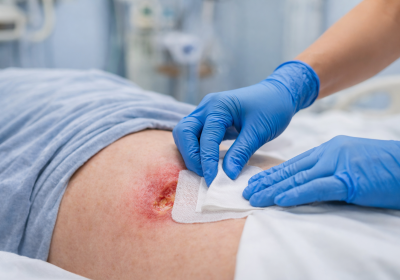

How to care for Bedsores at Home safely
A practical guide on caring for bedsores safely at home.
Daily inspection, gentle cleaning, pressure relief, and topical care are key. Cura Decubitus™ Ultra
supports wound healing, while Cura Decubitus™ Ointment reduces friction and moisture.
Common Mistakes in Bed sore Care that delay Healing
Bedsores (pressure ulcers) can worsen quickly if not managed correctly. While most caregivers act with good intent,
Certain common mistakes can unintentionally delay healing and increase discomfort.
Understanding these mistakes—and correcting them early—helps protect the skin, supports healing, and
prevents complications.
If you are new to the topic, read our detailed guide:
What Are Bedsores? Causes, Stages, Symptoms & Prevention.
Why proper bedsore care is critical
Bedsores develop when prolonged pressure reduces blood flow to the skin and underlying tissue. Without oxygen and
nutrients, the skin weakens and breaks down.
Early-stage bedsores can often be managed effectively, but incorrect care practices can cause wounds to deepen, heal slowly, or become infected.
1. Ignoring Early Warning Signs
The mistake
Redness, discoloration, or mild tenderness is often ignored because the skin is not broken.
Why does it delay healing?
Early-stage bedsores start beneath the skin. Waiting for an open wound allows damage to progress.
What to do instead
- Check pressure-prone areas daily.
- Act immediately if redness does not fade.
- Protect the skin before it breaks.
Applying Cura Decubitus™ Ointment early on pressure-prone or irritated areas helps:
- Reduce friction
- Soothe redness
- Support skin comfort and protection
Related reading:
Simple Prevention Tips to Reduce Bedsore Risk
2. Overusing Harsh Antiseptics
The mistake
Using strong antiseptics frequently to “kill germs.”
Why does it delay healing?
Harsh antiseptics can:
- Damage healthy tissue
- Dry the skin
- Slow natural repair
What to do instead
- Clean wounds gently using clean or distilled water
- Use antiseptics only if advised by a doctor
- Pat dry—never rub
For ongoing care, Cura Decubitus™ Ultra, used under medical guidance, supports wound bed preparation
and tissue repair without harsh irritation.
Related reading:
How Cura Decubitus Supports Natural Wound Healing
3. Poor or Infrequent Repositioning
The mistake
Leaving the patient in the same position for long hours.
Why does it delay healing?
Constant pressure blocks blood flow, worsening tissue damage and slowing healing.
What to do instead
- Reposition every 2 hours
- Alternate between back and side-lying positions
- Use pillows to offload pressure from hips, heels, and tailbone
Helpful guide:
Safe Positioning Techniques to Reduce Pressure
4. Excess Moisture on the Skin
The mistake
Allowing skin to remain wet from sweat, urine, or stool.
Why does it delay healing?
Moisture weakens the skin barrier and increases the risk of breakdown and infection.
What to do instead
- Clean and dry skin gently.
- Change diapers promptly.
- Protect the skin barrier consistently.
Using Cura Decubitus Ointment as a barrier layer helps:
- Protect skin from moisture.
- Reduce chafing and irritation.
- Maintain skin comfort.
🔗 Related reading:
Diaper Rash vs. Bedsores — How to Identify the Difference
5. Creating Friction During Movement
The mistake
Dragging the patient while repositioning or transferring.
Why does it delay healing?
Friction damages fragile skin and increases the risk of skin tears.
What to do instead
- Lift gently rather than dragging.
- Use draw sheets if available.
- Apply barrier protection before movement.
Barrier support with Cura Decubitus™ Ointment reduces friction during repositioning and helps
protect vulnerable skin.
6. Inconsistent or Incorrect Topical Care
The mistake
Switching products frequently or using random creams without consistency.
Why does it delay healing?
Healing requires a stable, protected environment. Inconsistent care disrupts recovery.
What to do instead
Follow a consistent wound-care routine
Use products designed for pressure-related skin damage
Cura Decubitus care approach:
- Cura Decubitus™ Ultra → supports tissue repair and
wound healing - Cura Decubitus™ Ointment → protects the surface,
reduces friction & moisture
Related reading:
How to Care for Bedsores at Home Safely
7. Overlooking Nutrition & Hydration
The mistake
Focusing only on topical care and ignoring nutrition.
Why does it delay healing?
Poor nutrition slows collagen formation and weakens immunity.
What to do instead
- Ensure adequate protein intake.
- Encourage fluids.
- Include fruits and vegetables rich in vitamins.
Nutrition supports healing from within, while Cura Decubitus™ supports healing
externally—both are essential.
Related reading:
Best Diet for Faster Wound Healing & Bedsore Recovery
When to Seek Medical Advice
Consult a healthcare professional if:
- Redness worsens or spreads.
- The skin breaks open.
- Pain, swelling, discharge, or fever appear.
- Early medical guidance prevents complications.
Key Takeaway
Most delays in bedsore healing occur due to avoidable care mistakes. Gentle handling, regular repositioning. Moisture control and consistent barrier protection make a significant difference.
Using a structured care routine with Cura Decubitus™ Ultra and Cura Decubitus™ Ointment, along with proper nutrition and pressure relief support, better healing and patient comfort.