
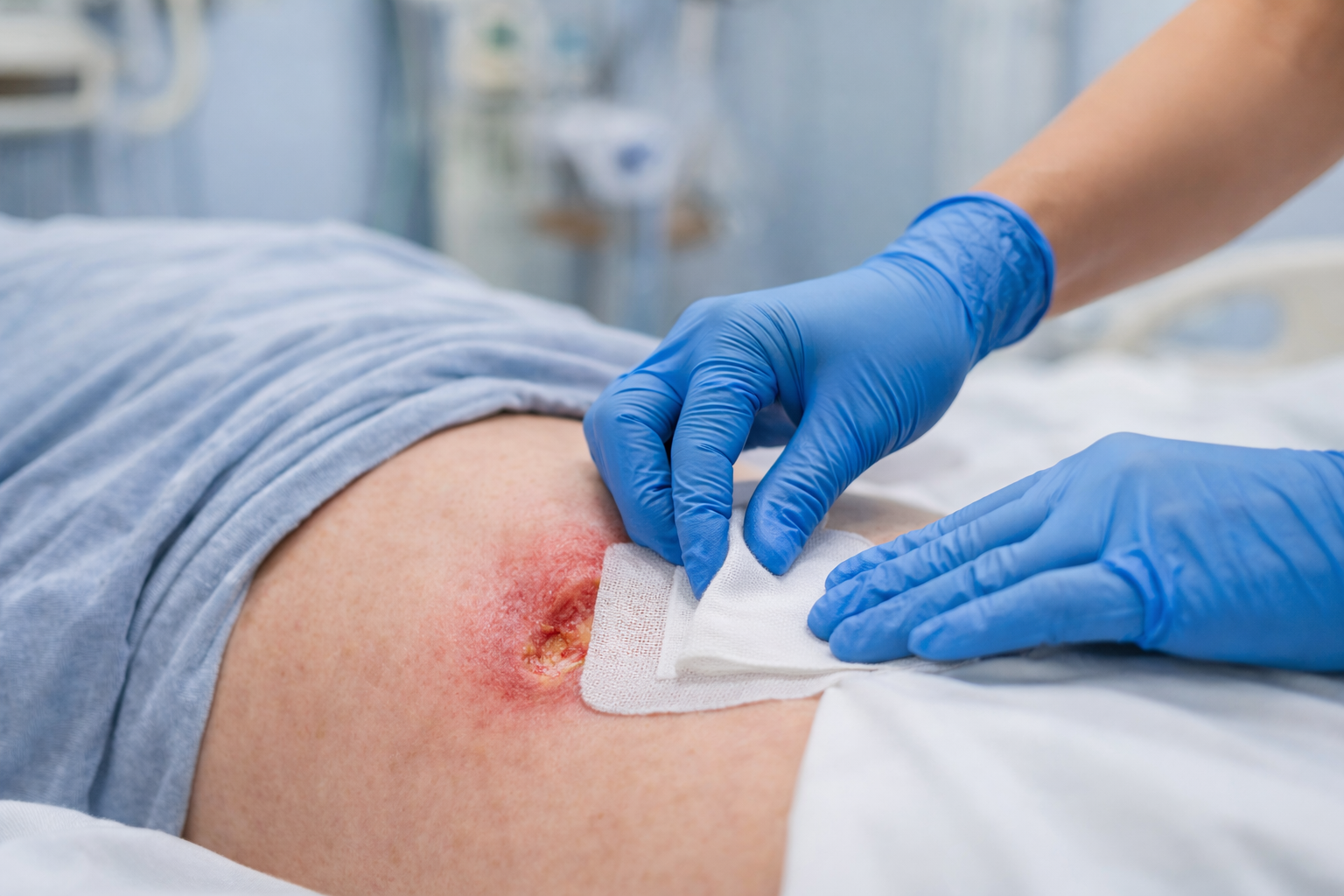
How often should Bedsores be Dressed and Treated?
A Practical Care Guide for Faster Healing
One of the most common questions caregivers and families ask is how often bedsores should be cleaned and dressed.
Proper frequency is crucial—too little care can delay healing, while overly aggressive care can irritate the skin.
Understanding the right balance helps maintain a clean, protected wound environment and supports natural healing.
If you’re new to bedsore care, start with:
What Are Bedsores? Causes, Stages, Symptoms & Prevention
Why dressing frequency matters in Bedsore Healing
Bedsores heal best when:
- The wound is clean.
- Pressure is relieved.
- The skin is protected from friction and moisture.
Cleaning and dressing at the right intervals helps:
- Reduce infection risk.
- Support tissue repair.
- Maintain moisture balance.
- Improve comfort.
How Often Should Bedsores Be Cleaned and Dressed?
General Guideline
Most bedsores require cleaning and dressing 2–3 times daily, or as advised by a healthcare professional.
However, frequency can vary based on:
- Stage of the bedsore.
- Amount of moisture or discharge.
- Patient’s mobility and skin condition.
Bedsore Care Frequency by Stage
Early-Stage Bedsores (Stage 1)
- Skin is red but not broken
- Clean once or twice daily
- Focus on pressure relief and skin protection
Applying Cura Decubitus™ Ointment to pressure-prone areas helps reduce friction and protect the skin barrier.
Related reading:
Simple Prevention Tips to Reduce Bedsore Risk
Open or Slow-Healing Bedsores (Stage 2–3)
- Clean gently 2–3 times daily.
- Remove debris and keep the wound clean.
- Avoid harsh antiseptics unless prescribed.
After cleaning:
- Apply Cura Decubitus™ Ultra directly to the wound to support tissue repair.
- Follow with Cura Decubitus™ Ointment to form a protective barrier.
- Cover lightly with sterile gauze.
This layered approach helps maintain an optimal healing environment.
Related reading:
How Cura Decubitus Supports Natural Wound Healing
Advanced Bedsores (Stage 4)
- Require medical supervision
- Dressing frequency depends on the wound condition and the doctor’s advice
Professional guidance is essential to prevent complications.
Step-by-Step: Correct Way to Clean and Dress a Bedsore
- Wash your hands and wear gloves
- Clean the wound gently with clean or distilled water
- Pat dry—do not rub
- Apply Cura Decubitus™ Ultra to the wound bed (if open)
- Apply Cura Decubitus™ Ointment over the area to protect the skin
- Cover lightly with a sterile dressing
Consistency is more important than overtreatment.
Common Dressing Mistakes to Avoid
- Cleaning too frequently with harsh antiseptics.
- Leaving the wound uncovered for long periods.
- Ignoring moisture buildup.
- Forgetting pressure relief and repositioning.
Helpful guide:
Common Mistakes in Bedsore Care That Delay Healing
Dressing frequency alone is not enough
Effective bedsore care also requires:
- Repositioning every 2 hours.
- Keeping skin clean and dry.
- Proper nutrition and hydration.
- Gentle movement to improve circulation.
Helpful reads:
- Safe Positioning Techniques to Reduce Pressure
- Exercises to Improve Circulation in Bedridden Patients
- Best Diet for Faster Wound Healing & Bedsore Recovery
When to Consult a Healthcare Professional
Seek medical advice if:
- The wound worsens despite regular care.
- Signs of infection appear.
- Pain or discharge increases.
Timely intervention prevents complications.
Key Takeaway
Most bedsores heal best with consistent care—cleaning and dressing 2–3 times daily, relieving pressure, and protecting the skin.
Using Cura Decubitus™ Ultra for wound supports, followed by Cura Decubitus™ Ointment for barrier protection, helps create a balanced healing environment
when used as part of a regular care routine.