Diaper Rash vs. Bedsores: Key differences, identification tips, and proper treatment guide
Skin irritation is common in bedridden patients, elderly individuals, and those using diapers. Two conditions that are often confused are diaper rash and bedsores (pressure ulcers). While they may appear similar in early stages, their causes, risk factors, and care needs are different.
Understanding the difference helps caregivers take the right steps early and prevent complications.
Why It’s Important to Identify the Difference
Diaper rash and bedsores require different preventive approaches. Treating a pressure-related injury like a moisture rash or vice versa can delay healing and worsen skin damage.
Early identification allows timely care and better skin protection.
What Is Diaper Rash?
Diaper rash is a moisture-related skin irritation caused by prolonged exposure to urine, stool, sweat, or friction from diapers.
Common Causes of Diaper Rash
- Wet or soiled diapers for long periods,
- Friction from diaper material,
- Sensitive or fragile skin,
- Infrequent cleaning.
How Diaper Rash Looks
- Red, inflamed skin,
- Flat rash without depth,
- Often spreads across a wider area,
- Skin may look shiny or irritated.
Areas Commonly Affected
- Buttocks,
- Groin folds,
- Inner thighs.
Diaper rash is usually superficial and improves with proper hygiene and moisture control.
What are Bedsores (Pressure Ulcers)?
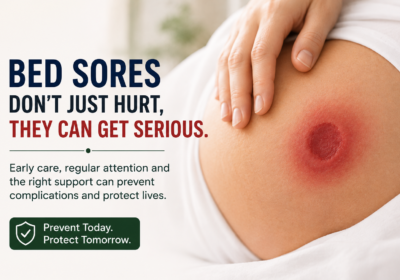
Bedsores are pressure-related injuries that occur when constant pressure reduces blood flow to the skin and underlying tissue.
Common Causes of Bedsores
- Prolonged pressure on one area,
- Limited movement or immobility,
- Poor circulation,
- Friction during repositioning.
How Bedsores Look
- Red or darkened skin that does not fade,
- Localized to bony areas,
- May feel warm or painful,
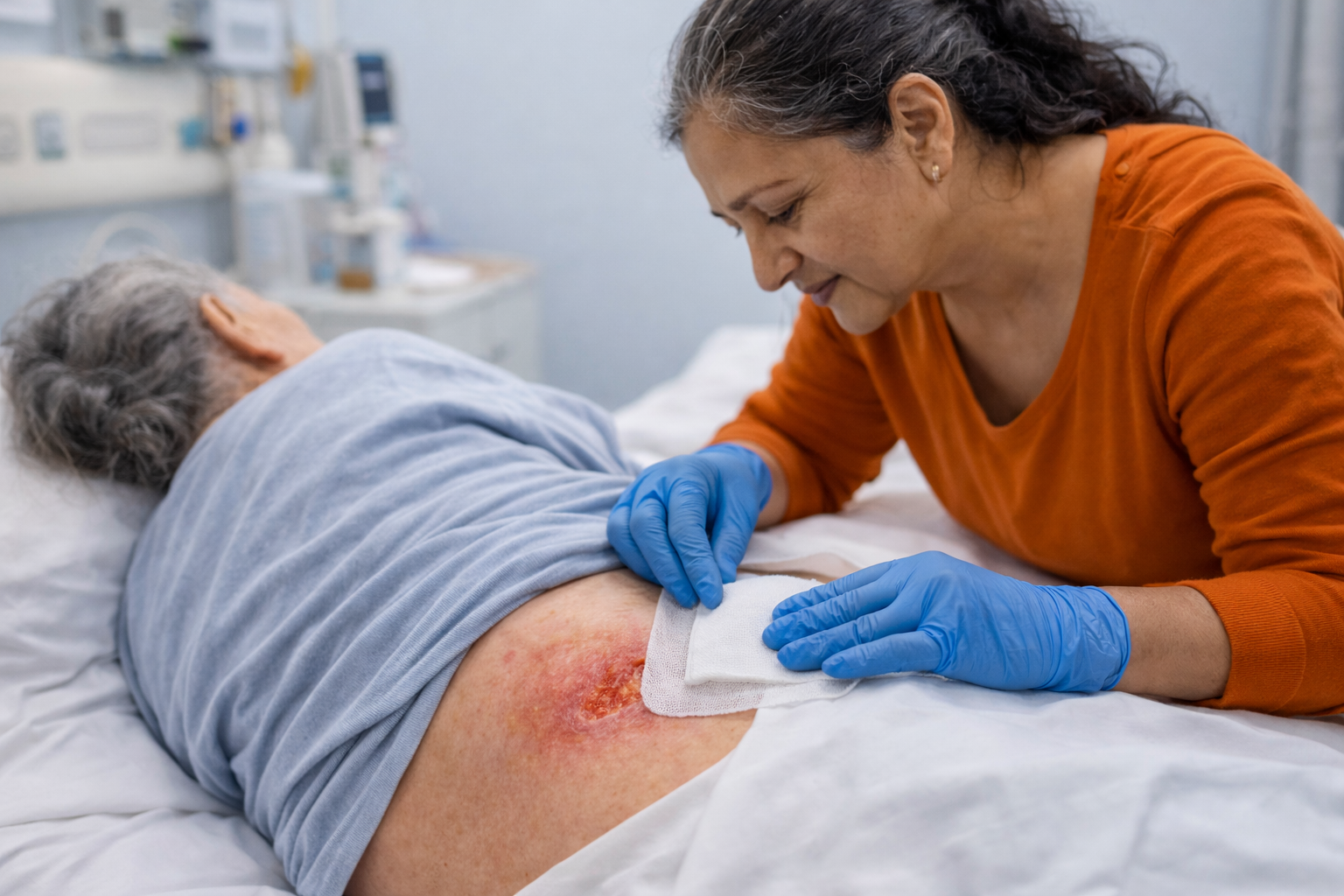
- Can progress to blisters or open wounds.
Areas Commonly Affected
- Heels,
- Hips,
- Lower back and tailbone,
- Elbows,
- Back of the head.
Bedsores often start beneath the skin and can worsen if pressure is not relieved.
Key Differences at a Glance
| Feature | Diaper Rash | Bedsores |
| Main cause | Moisture & irritation | Pressure & reduced blood flow |
| Depth | Superficial | Can become deep |
| Location | Diaper area | Bony pressure points |
| Appearance | Diffuse redness | Localised redness or wound |
| Prevention | Keep skin dry | Relieve pressure |
How to Care for Diaper Rash
- Change diapers frequently.
- Clean skin gently with mild cleansers.
- Pat skin dry—avoid rubbing.
- Allow short diaper-free periods if possible.
Using barrier care like Cura Decubitus™ Ointment helps protect the skin from moisture and reduces friction, supporting comfort and recovery.
How to Care for Bedsores
- Reposition the patient every 2 hours.
- Reduce pressure on affected areas.
- Keep skin clean and dry.
- Support healing with appropriate topical care.
For early-stage bedsores or pressure-prone areas, Cura Decubitus™ Ointment helps protect the skin barrier and reduce friction.
For open or slow-healing wounds, Cura Decubitus™ Ultra, used under medical guidance, supports natural wound healing.
When Both Conditions Can Occur Together
In some bedridden or diaper-dependent patients, moisture and pressure can act together, increasing the risk of skin breakdown.
In such cases:
- Maintain strict hygiene.
- Relieve pressure regularly.
- Use barrier protection consistently.
Barrier care supports both moisture protection and friction reduction.
When to Seek Medical Advice
Consult a healthcare provider if:
- Redness does not improve within a few days.
- Skin breaks open.
- Pain, swelling, or discharge appears.
Early medical attention prevents complications.
Diaper rash is caused by moisture, while bedsores are caused by pressure. Identifying the difference early helps ensure proper care and faster skin recovery.
Using gentle skin care practices along with protective barrier support like Cura Decubitus™ Ointment plays an important role in managing and preventing both conditions.
Related Articles