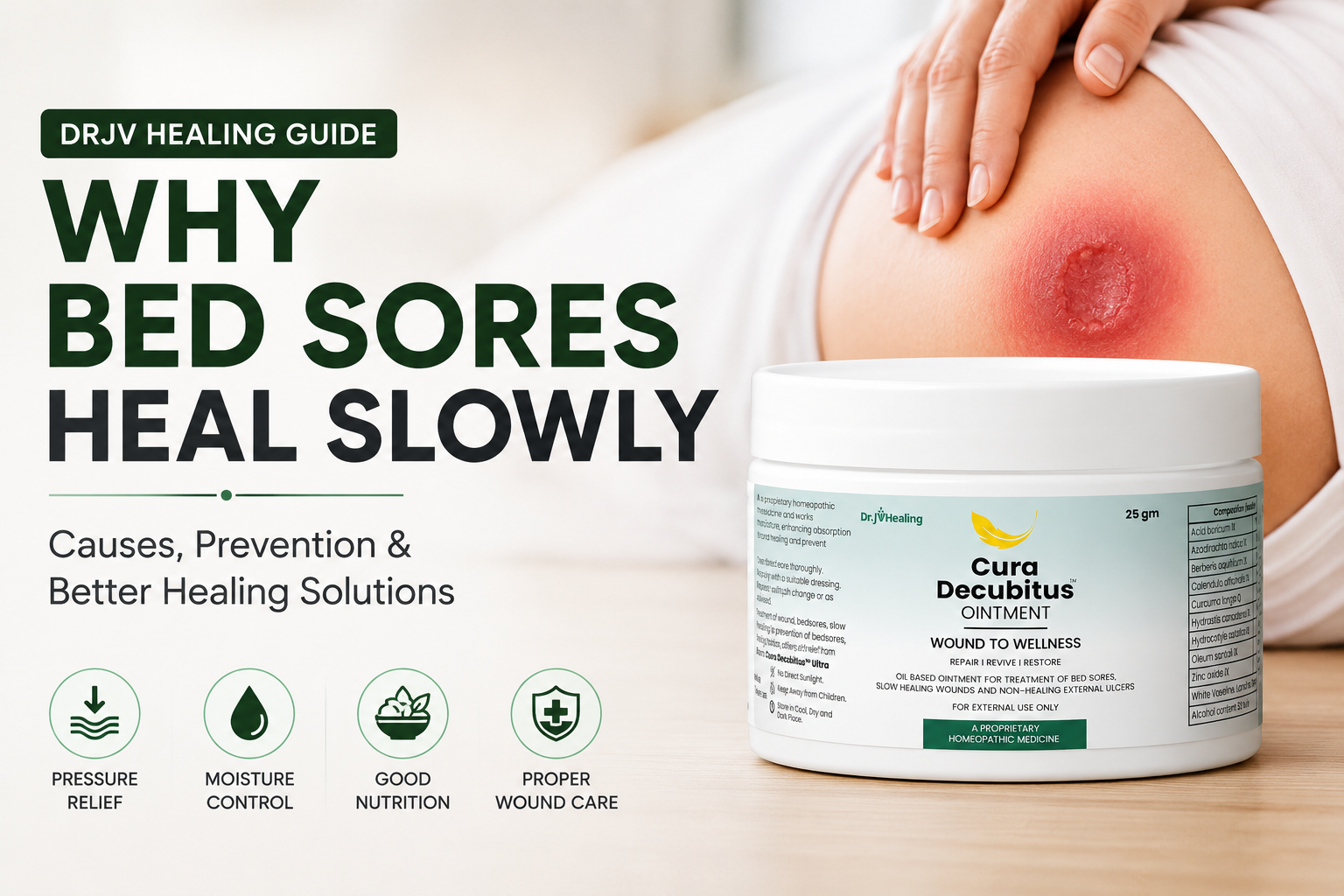
A bedsore can be frustrating for patients and caregivers, especially when an ointment is being used consistently but the wound still does not appear to be improving.
It is easy to assume that the problem is simply the choice of ointment. However, bedsore healing depends on much more than a topical product. Pressure, nutrition, moisture, circulation, infection, wound depth, and the patient’s overall health can all influence how quickly a pressure ulcer heals.
This is why a bedsore healing ointment should generally be considered one part of a complete wound-care approach, rather than a standalone treatment.
For patients and caregivers looking for better bedsore management, understanding what may be slowing healing is an important first step.
1. Continuous Pressure Is Still Present
One of the most common reasons a bedsore does not heal is that pressure continues to affect the same area.
If a patient remains in the same position for long periods, the damaged tissue continues to experience reduced blood flow. Applying an ointment cannot remove that pressure.
Regular repositioning and appropriate pressure-relieving surfaces are therefore fundamental parts of pressure ulcer care. Healthcare guidance emphasizes pressure relief, positioning, and support surfaces as important components of prevention and healing.
For caregivers, this means looking beyond the wound itself. Ask:
Is the patient being repositioned regularly?
Is the affected area being properly offloaded?
Is the mattress or cushion appropriate?
Are the heels, hips, tailbone, or other vulnerable areas receiving excessive pressure?
If the underlying pressure is not addressed, healing may remain slow even when topical care is consistent.
2. The Wound May Be Deeper Than It Appears
A bedsore that looks relatively small on the surface can sometimes involve deeper tissue damage.
Pressure injuries are categorized according to their severity, and deeper wounds generally require more comprehensive wound management.
A deeper or complicated pressure ulcer may require professional assessment, specialized dressings, debridement, or other interventions.
This is why caregivers should not judge healing solely by the visible size of the wound.
If a wound is becoming deeper, producing increasing drainage, developing an unpleasant odor, or showing other concerning changes, professional assessment is important.
3. Infection Can Delay Healing
Infection is another important reason a bedsore may fail to heal normally.
Signs that may require medical attention include:
Increasing redness or swelling
Increasing pain
Pus or unusual discharge
Foul odor
Fever
Worsening wound appearance
Pressure ulcers can become complicated by infections such as cellulitis, and in serious cases infection can extend deeper into tissue or bone.
An ointment should not be used as a substitute for medical treatment when infection is suspected.
4. Poor Nutrition Can Slow Recovery
Wound healing requires energy, protein, fluids, vitamins, and minerals.
When a patient is not eating adequately or is dehydrated, the body may have fewer resources available for tissue repair.
Healthcare guidance specifically highlights nutrition and hydration as important factors in pressure ulcer healing.
Caregivers should pay attention to:
Reduced appetite
Unintentional weight loss
Low protein intake
Poor fluid intake
Difficulty eating
Existing nutritional deficiencies
If nutritional concerns exist, a doctor or qualified dietitian can help determine whether dietary changes or nutritional support are appropriate.
5. Excessive Moisture Is Damaging the Skin
Moisture can be particularly problematic for bedridden patients.
Sweat, urine, stool, wound drainage, and prolonged diaper exposure can weaken the skin and make it more susceptible to irritation and breakdown.
Moisture management is therefore an important part of pressure ulcer care.
This is where appropriate skin-protection products may have a role.
A suitable protective formulation can help support the surrounding skin, particularly where moisture and friction are recurring concerns. However, the product should complement, not replace, regular cleaning, drying, repositioning, and wound assessment.
6. Friction and Shear May Be Repeatedly Irritating the Area
Sometimes the problem is not simply pressure.
Dragging a patient across a bedsheet, allowing the patient to slide down in bed, or repeated rubbing against clothing and bedding can create friction and shear.
These forces can damage already fragile skin and interfere with recovery.
Caregivers should therefore use appropriate moving and handling techniques and avoid dragging patients whenever possible. Pressure ulcer guidance also emphasizes reducing friction and shear as part of comprehensive management.
7. The Patient’s Other Health Conditions May Affect Healing
Some patients naturally have a greater risk of delayed wound healing.
Conditions affecting:
Blood circulation
Blood glucose control
Mobility
Sensation
Nutrition
Immune function
can influence recovery.
For example, a patient with limited sensation may not feel discomfort from prolonged pressure and therefore may remain in one position for too long.
This is why bedsore management needs to be individualized rather than based on the ointment alone.
8. The Wrong Product May Be Being Used for the Situation
Not every cream or ointment is designed for the same purpose.
A product intended for general dry skin may not address the needs of pressure-prone skin. Similarly, an antimicrobial or antibiotic product should not automatically be used simply because a wound exists.
Some clinical guidance notes that topical antiseptic or antimicrobial creams are not routinely recommended for pressure ulcers unless there is a specific indication.
The appropriate wound-care product depends on the patient’s skin condition, wound characteristics, and clinical assessment.
9. Healing Takes Time
Another important point is that wound healing is not always immediate.
Even when appropriate care is being provided, a pressure ulcer may take time to improve, particularly when the patient has multiple risk factors.
Instead of judging an ointment after only a few applications, caregivers should monitor the wound systematically and follow the treatment plan provided by the healthcare professional.
A wound that is not showing expected improvement should be reassessed rather than simply treated with more products. Some wound-care guidance recommends monitoring healing over time and changing the treatment approach when there is no response or infection develops.
Where a Bedsore Healing Ointment Fits Into Care
A topical ointment can have a useful supporting role in bedsore management, particularly when the objective is to protect vulnerable skin and manage factors such as moisture and friction.
But it should be viewed as part of a broader routine that includes:
Pressure relief
Repositioning
Appropriate wound dressings when required
Skin hygiene
Moisture management
Nutrition and hydration
Infection monitoring
Professional wound assessment when necessary
This broader approach is particularly important for bedridden patients because the factors that caused the bedsore can continue even after treatment begins.
How DRJV Healing Supports Bedsore Care
DRJV Healing’s approach to wound care aligns with the importance of combining skin protection and wound management with appropriate daily care practices.
Its Cura-Decubitus™ Ointment can be considered as a supportive topical solution within a broader bedsore-care routine. The product is positioned for bedsore and pressure-ulcer care, while the overall management of a pressure ulcer still needs to address pressure, hygiene, moisture, nutrition, and other factors affecting healing.
For caregivers, this distinction is important. A good wound-care product can support the process, but it cannot replace pressure relief or professional medical care when a wound is severe or complications are present.
When Should You Seek Medical Help?
Do not continue changing ointments on your own if a bedsore is getting worse.
Seek professional medical advice if:
The wound is becoming deeper
Redness or swelling is increasing
There is pus or foul-smelling drainage
The patient develops fever
Pain is increasing
The wound is not improving
The patient has significant medical conditions that may affect healing
Early assessment can help identify why healing is delayed and whether the treatment approach needs to change.
Conclusion
When a bedsore does not heal despite using an ointment, the ointment itself may not be the real problem.
Continued pressure, inadequate nutrition, moisture, friction, infection, poor circulation, underlying health conditions, or a deeper wound can all contribute to delayed healing.
The most effective approach is therefore not to rely on one product but to create a comprehensive care plan that addresses the causes of pressure damage while supporting the wound itself.
DRJV Healing’s Cura-Decubitus™ Ointment can form part of this broader approach to bedsore and pressure-ulcer care. Used appropriately alongside pressure relief, hygiene, moisture management, nutrition, and professional guidance where needed, supportive topical care can play a useful role in protecting vulnerable skin and supporting the healing process.
The key is simple: when a bedsore is not healing, don’t just ask which ointment to use next. Ask what is preventing the wound from healing in the first place.