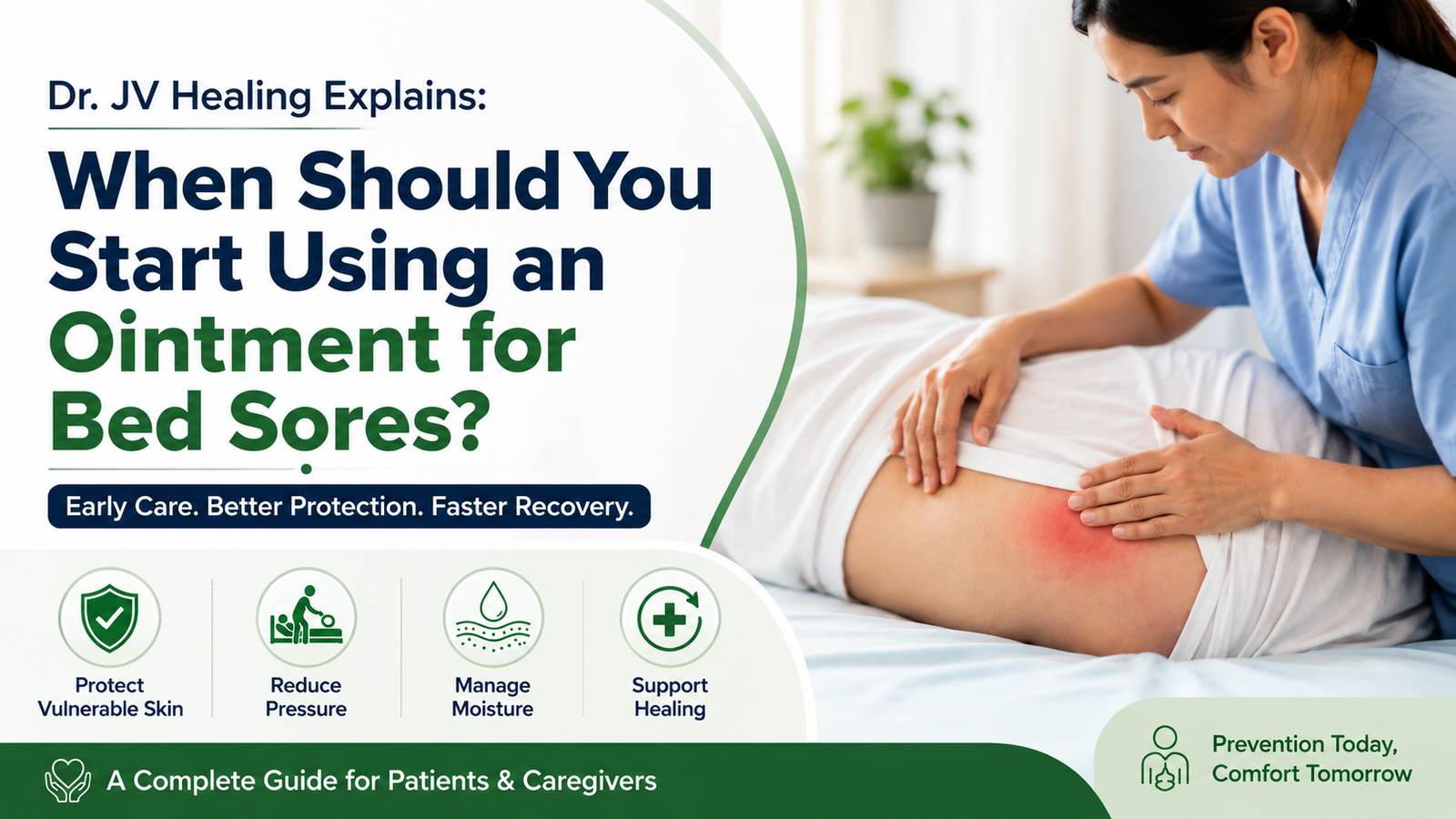
Dr. JV Healing Explains: When Should You Start Using an Ointment for Bed Sores?
Bed sores rarely appear overnight.
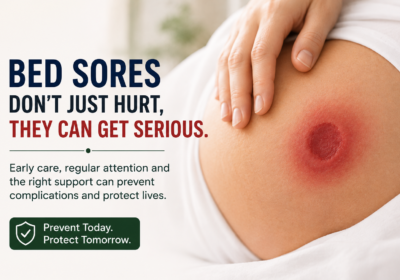
They usually begin with something small—a patch of redness, slight irritation, or an area of skin that looks different from the surrounding tissue. Because these early signs often seem harmless, many patients and caregivers ignore them, assuming the skin will recover on its own.
Unfortunately, this delay is one of the biggest reasons why bed sores become serious.
One of the most common questions caregivers ask is:
“When should I start using an ointment for bed sores?”
The answer is simple: the earlier you pay attention to vulnerable skin, the better your chances of preventing serious damage.
However, understanding exactly when an ointment may help and when professional medical care is necessary can make a significant difference in patient comfort and recovery.
At Dr. JV Healing, preventive wound care and early skin protection are considered essential parts of bedsore management. This guide explains when to start using an ointment for bed sores, what signs to look for, and how supportive skin care can become part of a complete pressure ulcer management routine.
Understanding Bed Sores and Pressure Ulcers
Bed sores, also called pressure ulcers or pressure sores, are injuries to the skin and underlying tissue caused by prolonged pressure.
When a person remains in one position for extended periods:
- blood circulation decreases,
- oxygen supply becomes limited,
- and tissues begin to weaken.
Without proper intervention, the affected skin can gradually break down and develop into a wound.
Bed sores most commonly occur on:
- lower back and tailbone,
- hips,
- heels,
- ankles,
- shoulders,
- elbows.
Individuals who are bedridden, wheelchair-bound, elderly, or recovering from surgery are particularly vulnerable because they may be unable to reposition themselves frequently.
Why Early Action Matters
One of the biggest misconceptions about bed sores is that treatment should only begin once an open wound develops.
In reality, skin damage often begins long before a visible wound appears.
The early stages may involve:
- redness,
- warmth,
- tenderness,
- swelling,
- or skin discoloration.
These signs indicate that the skin is under stress and may be at risk of further breakdown.
Addressing the issue during this stage can often prevent the condition from becoming more severe.
The Different Stages of Bed Sores
Understanding the stages of pressure ulcers helps determine when supportive care and ointments may become useful.
Stage 1: Persistent Redness
This is the earliest stage.
The skin remains intact but shows:
- redness,
- discoloration,
- tenderness,
- or warmth.
This stage should never be ignored because it is often the first warning sign of pressure damage.
Stage 2: Partial Skin Loss
The skin may:
- blister,
- peel,
- or develop a shallow open wound.
The area becomes more sensitive and requires careful management.
Stage 3: Deep Wound Formation
The ulcer extends deeper into the tissue and may expose fat beneath the skin.
At this stage, professional wound management becomes increasingly important.
Stage 4: Severe Tissue Damage
This is the most advanced stage.
The wound may involve:
- muscles,
- tendons,
- or bone.
Immediate medical supervision is necessary.
So, When Should You Start Using an Ointment for Bed Sores?
The answer depends on the condition of the skin and the patient’s overall care requirements.
When Skin Shows Early Signs of Damage
Supportive skin care can become important when:
- redness does not disappear,
- skin appears irritated,
- pressure-prone areas become sensitive,
- or the skin starts showing signs of breakdown.
Protective ointments are often used during this stage to support skin integrity and help protect vulnerable areas from further stress.
When Patients Are at High Risk of Developing Bed Sores
Certain individuals are naturally at higher risk, including:
- bedridden patients,
- elderly individuals,
- wheelchair users,
- diabetic patients,
- and people with limited mobility.
For these individuals, preventive skin protection may become an important part of daily care routines.
When Skin Is Exposed to Moisture
Moisture is one of the most common causes of skin breakdown.
Sources include:
- sweat,
- urine,
- wound drainage,
- prolonged diaper use.
Moisture weakens the skin barrier and increases friction damage.
Protective formulations may help support vulnerable skin in these situations.
When Friction and Shear Become a Concern
Repeated rubbing against:
- bedsheets,
- clothing,
- wheelchairs,
- or support surfaces
can damage fragile skin.
Supportive ointments may help reduce the effects of friction on high-risk areas.
What Does a Good Bedsore Ointment Actually Do?
Many people assume an ointment’s only job is to “heal” a wound.
However, effective supportive wound care products often serve several important functions.
They may help:
- protect the skin,
- support moisture balance,
- reduce friction-related irritation,
- create a protective barrier,
- and contribute to a healthier environment for skin recovery.
An ointment should always be viewed as one part of a larger care strategy.
Ointment Alone Is Not Enough
Even the best ointment for bed sores cannot compensate for poor caregiving practices.
Successful bedsore prevention and management usually involve:
Regular Repositioning
Changing position regularly helps reduce continuous pressure.
Proper Hygiene
Clean skin supports healthier recovery conditions.
Moisture Management
Keeping the skin dry and protected reduces irritation.
Good Nutrition
Healthy skin depends on:
- protein,
- hydration,
- vitamins,
- and minerals.
Daily Skin Checks
Regular inspection allows caregivers to identify concerns early.
When these practices work together, skin protection and recovery become more effective.
Common Mistakes Caregivers Make
Waiting for an Open Wound
Many caregivers delay treatment until the skin breaks.
By then, tissue damage may already be significant.
Ignoring Redness
Persistent redness should never be dismissed.
It is often the body’s first warning sign.
Using Random Products
Not every cream or ointment is suitable for pressure-prone skin.
Products should be chosen carefully and used appropriately.
Focusing Only on Treatment
Preventive care is just as important as treating existing wounds.
Protecting vulnerable skin early often prevents more serious complications later.
When Should You See a Doctor?
Professional medical care becomes important if:
- the wound deepens,
- infection develops,
- fever occurs,
- tissue darkens,
- pain increases,
- or healing stops completely.
Patients with diabetes or severe circulation problems should be particularly cautious and avoid delaying medical consultation.
The Dr. JV Healing Approach to Bedsore Care
At Dr. JV Healing, wound care is viewed through a preventive lens.
The goal is not simply to manage wounds after they appear but to support patients and caregivers in protecting vulnerable skin before serious breakdown occurs.
This approach emphasizes:
- early identification,
- pressure management,
- moisture control,
- skin protection,
- and consistent daily care.
Because when it comes to pressure ulcers, prevention and early intervention often make the biggest difference.
Conclusion
Knowing when to start using an ointment for bed sores is less about waiting for a wound to appear and more about paying attention to early warning signs.
Redness, irritation, moisture exposure, and friction-related stress are often signals that the skin needs additional support and protection.
Supportive wound care products can become valuable tools when used as part of a complete care strategy that includes repositioning, hygiene, nutrition, and regular monitoring.
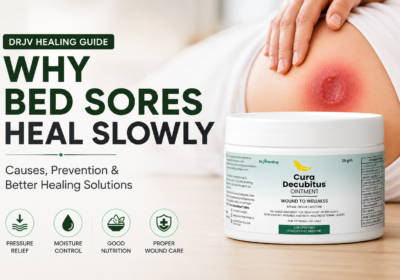
At Dr. JV Healing, the focus remains on helping patients and caregivers adopt a proactive approach to bedsore management. Products like Cura Decubitus™ Ointment have been developed to support vulnerable skin by helping reduce friction, moisture-related irritation, and repeated stress associated with bed sores and pressure ulcers.
Because in many cases, the most effective way to manage bed sores is to begin protecting the skin before a small concern becomes a serious wound.
Related Articles